

Calm the hormone signal
Finasteride blocks the enzyme that converts testosterone into DHT, a hormone linked to shrinking hair follicles in pattern hair loss.
Hair Health
Prescription required. Some options are compounded; the FDA does not approve compounded medications. Results vary.


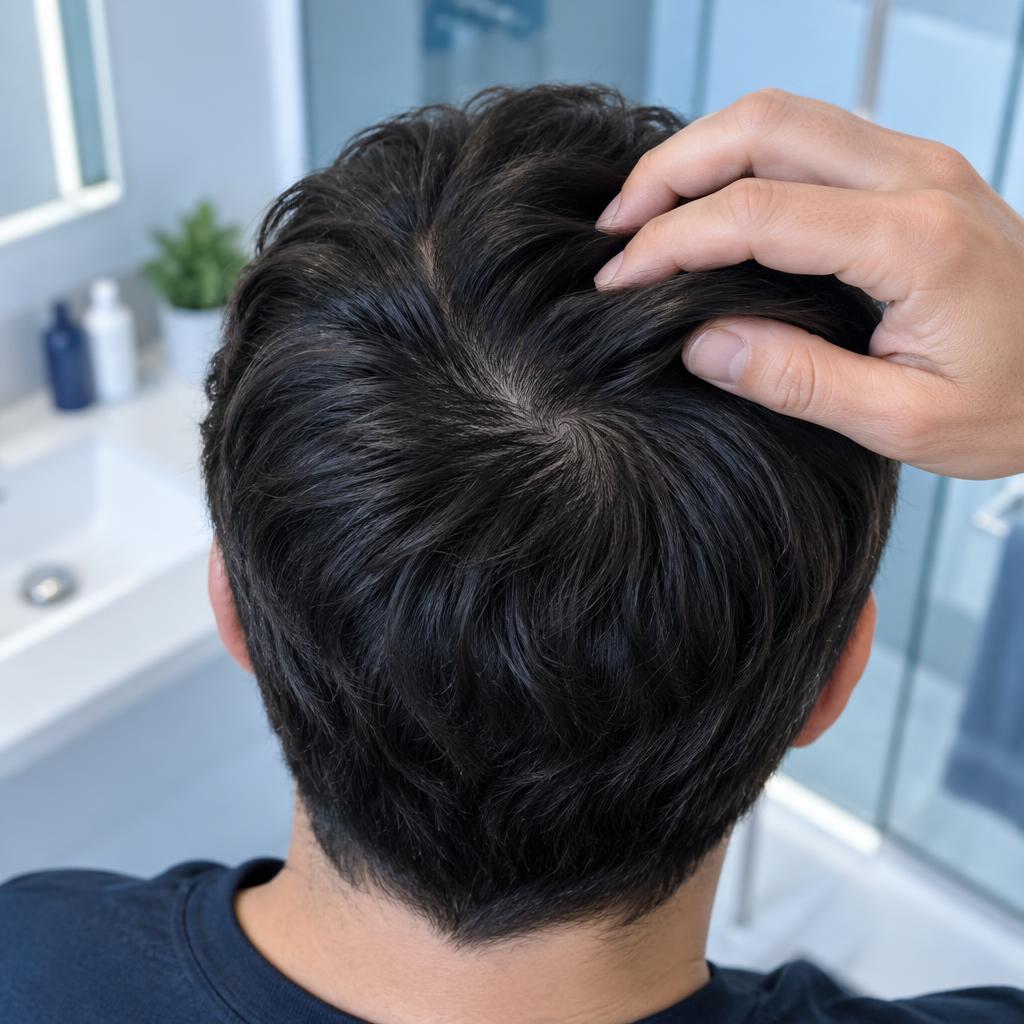


Hair Restoration Capsules
Finasteride 1 mg · daily capsule
View treatment →
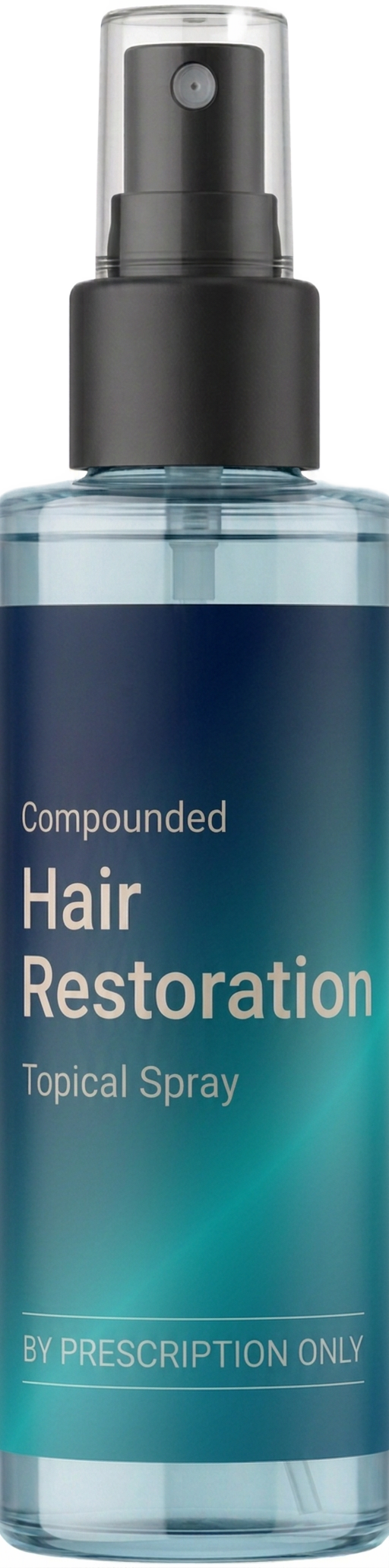
Minoxidil / Spironolactone Hair Spray
Minoxidil 5% / Spironolactone 1% · scalp spray
View treatment →

Minoxidil / Spironolactone Hair Capsules
Minoxidil 1.25 mg / Spironolactone 50 mg · capsules
View treatment →
Minoxidil 6% / Finasteride 0.1% Topical
Compounded topical · 30-day supply
View treatment →
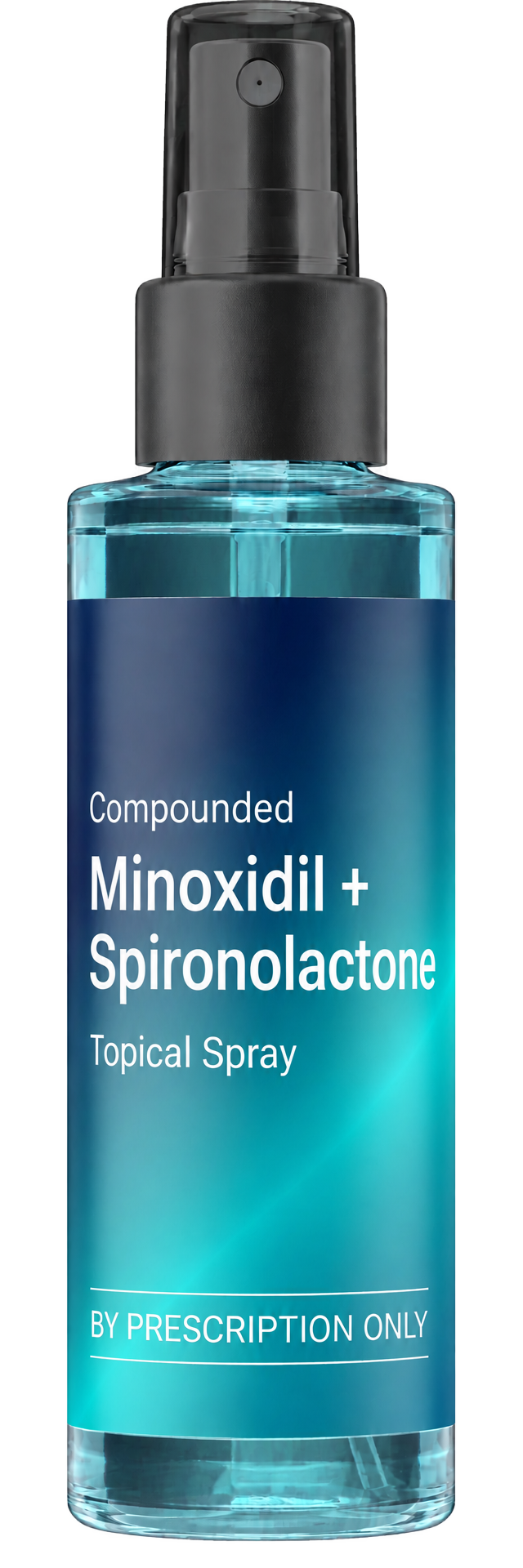
Minoxidil / Spironolactone Topical
Compounded topical · 30-day supply
View treatment →

Minoxidil 0.1% / Finasteride 0.125% Topical
Compounded topical · 30-day supply
View treatment →
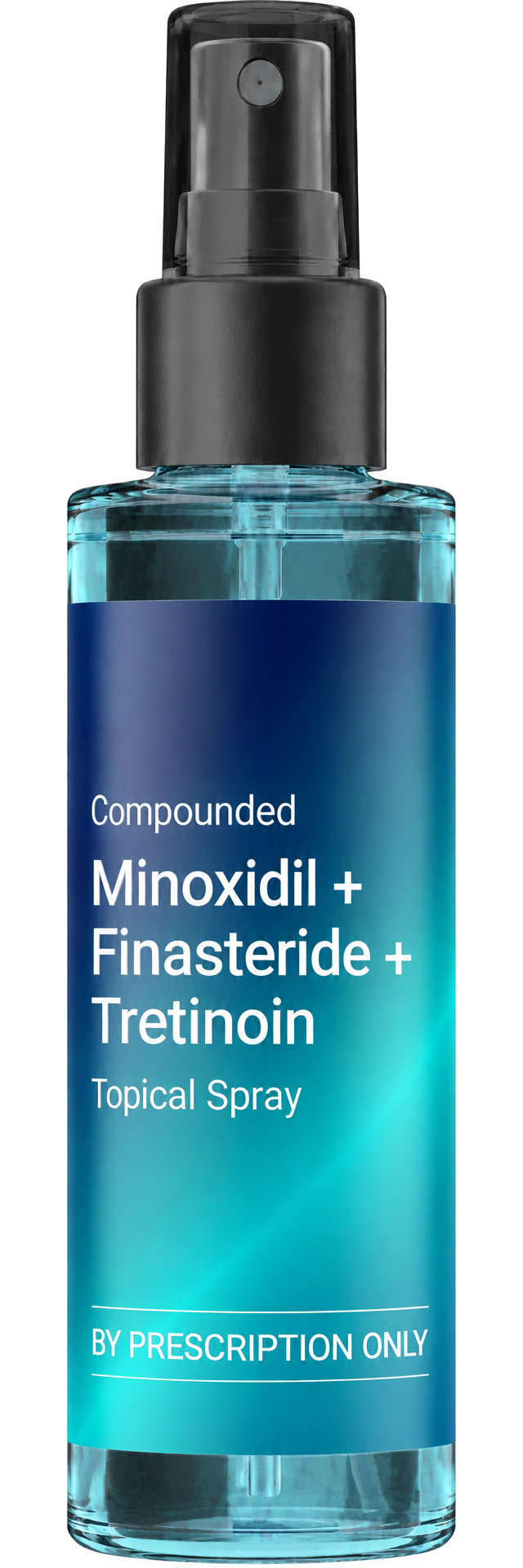
Advanced Hair Topical (Minoxidil / Finasteride / Tretinoin)
Compounded topical · 30-day supply
View treatment →
Finasteride 1 mg
Finasteride 1 mg · daily tablet
View treatment →

Dutasteride Capsules
Oral capsules · daily
View treatment →
Minoxidil 6% / Finasteride 0.25% Topical
Topical solution · 90 mL
View treatment →
The Mechanism
Finasteride blocks the enzyme that converts testosterone into DHT, a hormone linked to shrinking hair follicles in pattern hair loss.
Minoxidil is thought to improve blood flow around the follicle and extend the growth phase of the hair cycle.
Some formulas pair both ingredients so they address different parts of hair loss. Your clinician decides whether a combination is right for you.
Illustrations are simplified. Responses vary, and treatment is prescribed only after a clinician reviews your health history.
Where to Start
Hair loss shows up differently in men and women, so we built the paths separately. Each begins with your pattern, your history, and your labs.

For diffuse thinning, postpartum and perimenopausal shedding, and density loss along the part line. Plans may combine topical, oral, and nutrient support, shaped around your hormones and labs.

For receding hairlines, crown thinning, and androgenetic hair loss. Plans are shaped by your pattern, your timeline, and how early you start, not a one-size-fits-all approach.
Your care, step by step
Share your hair concerns, health history, and current medications.
Your clinician considers your information and whether treatment or further testing is appropriate.
Discuss how you are using your treatment, changes you notice, and any side effects at check-ins.
What To Expect
What you notice, and how quickly, depends on the treatment, dose, starting point, and your own biology.
Hair responds on a follicle cycle, not a weekly one. The early months focus on slowing loss; density follows later. Results vary, and no outcomes or timelines are guaranteed.
A drop in daily hair fall is usually the earliest measurable change, typically appearing within the first two to three months.
Irritation, flaking, and oiliness tend to settle down before any change in density shows up.
New growth tends to come in finer at first, then thickens as your follicle cycle stabilizes.
Noticeable fullness through the crown and hairline generally takes four to six months of consistent use.
Hair care requires ongoing maintenance. Benefits last while treatment continues, and fade gradually if it's stopped.
Questions
Most patients notice reduced shedding within two to three months, with visible density changes around four to six months. Hair grows on a slow cycle, so consistency matters more than intensity.
Often, yes. Thyroid, iron, and hormone markers can drive hair loss on their own. Your physician will let you know what's worth checking before you start.
Yes. Pattern, cause, and safe options all differ, and some treatments suited to men aren't appropriate for women, particularly where pregnancy is possible.
Hair care requires maintenance. Gains typically fade over several months after stopping, so your physician talks through a long-term plan with you upfront.
Usually. Hair often improves alongside hormone, thyroid, and nutrient support. Your physician reviews everything together to check for interactions.
A licensed physician reviews every intake and makes all clinical decisions. Treatment is prescribed only when it's the right fit for you.
Begin with a short intake covering your hair history, symptoms, and labs. You'll get a clear answer on what's right for you.