
Sleep
Trazodone
A low-dose prescription option that helps you fall and stay asleep, without next-day grogginess for most people.
Coming Soon
Trazodone is on the way. Pricing and enrollment will open here as soon as this therapy becomes available.
Prescription process, compounding and renewal detailsReadHide
All prescription items go through physician review before they ship. After checkout, you'll receive member portal access to complete a medical intake form. A licensed physician reviews your intake, and once approved, your medication is on its way. Your exact dose is set by your provider during that review.
This product requires prescription and evaluation by a licensed provider. Buying it does not guarantee you will be prescribed the medication; if you're not approved, you won't be charged. Compounded formulations are prepared by licensed 503A pharmacies and have not been evaluated by the FDA for safety or efficacy. Availability differs by state, and this product is not intended for anyone under 18. Nothing here is medical advice — speak with your provider about risks, side effects and interactions.
Multi-month plans automatically renew at the end of each term unless you cancel. You can cancel anytime before renewal by reaching out to connect@shivrxrx.net or +1 979-978-0561.
Understand the protocol
Trazodone
A calming effect that helps you fall and stay asleep.
At low doses, trazodone has a sedating effect that can help ease the transition into sleep and support staying asleep through the night.
In plain terms
- At low doses, trazodone has a calming, sedating effect that can help you fall asleep and stay asleep.
How it works
How sleep is triggered, and where trazodone steps in.
Falling and staying asleep depends on your body clock and on brain signals that wind you down.
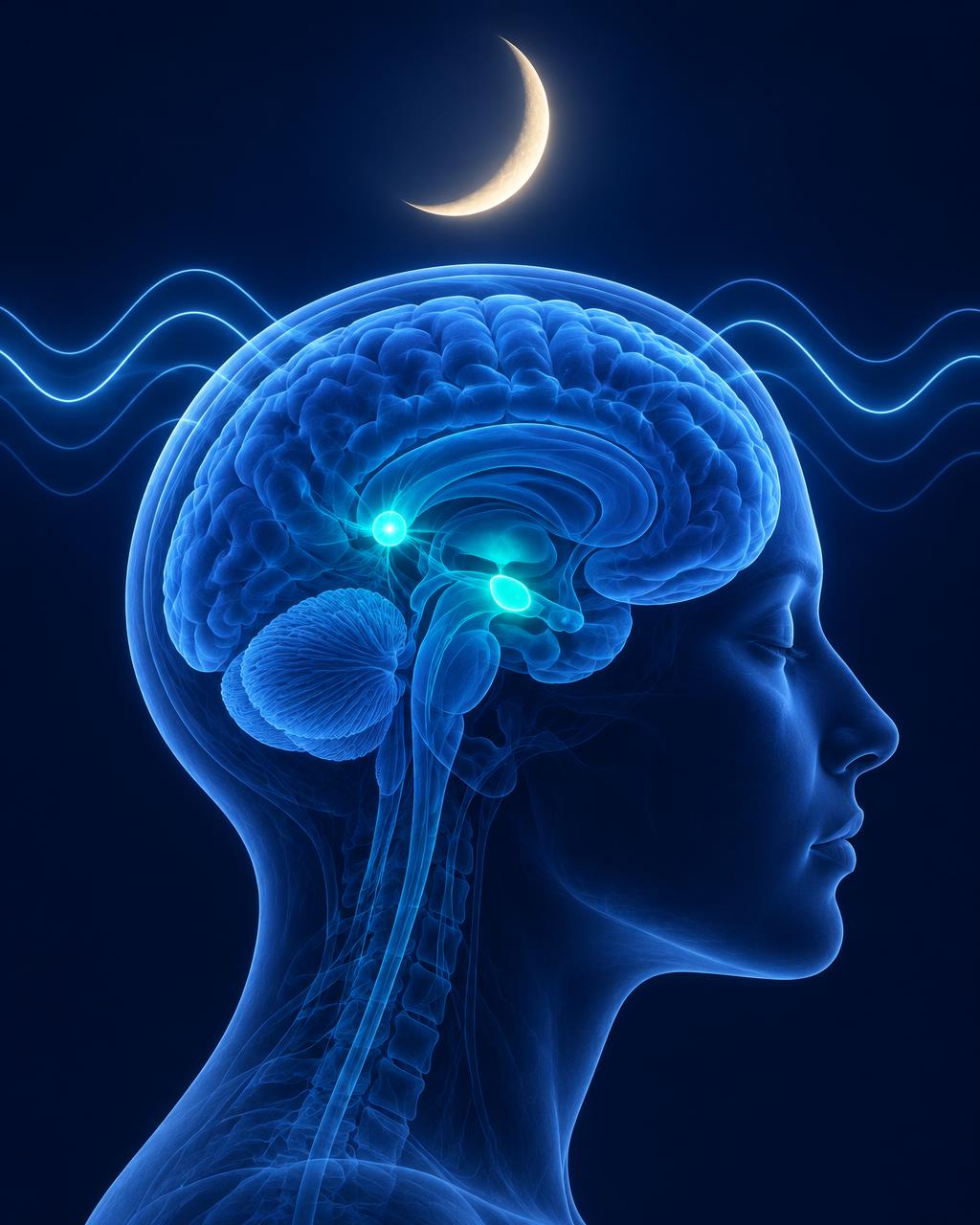
B · Brain waves
Electrical rhythms slow as you move into deeper stages of sleep.
The process, in three steps
- The clock
Darkness cues melatonin
As light fades, the pineal gland releases melatonin, which signals the brain's body clock that it's time to sleep.
- The problem
Signals get out of sync
Stress, screens, shift work or an overactive mind can delay or interrupt the brain's wind-down signals.
- The treatment
Trazodone calms the signal
At low doses, trazodone blocks certain serotonin and histamine receptors in the brain, which has a sedating effect that helps you fall and stay asleep.
The pathway
Low-dose use for sleep is off-label; your clinician will explain.
What progress looks like.
Results from Trazodone aren't something a photo can show. Progress is measured by how you feel and, where relevant, by lab values your clinician reviews over time.
What gets tracked
- Sleep quality you report
- Daytime alertness
- Side effects
Individual results vary and are not guaranteed.
 Illustrative
, not a predicted result.
- Stage 1
Starting point
Your intake and any labs set a baseline your clinician can refer back to.
- Stage 2
Check-ins
You share how things are going. Your clinician reviews what you've noticed.
- Stage 3
Adjustments
Your plan may be adjusted based on your response, side effects and goals.
Brain fog is a signal.
We track down the reason.
Fog has a short list of causes, and we check each one.